2026 Top Construction Equipment Trends You Should Know?
As we look towards 2026, the landscape of construction equipment is evolving rapidly. New innovations and technologies are reshaping the industry. This change is driven by the need for efficiency and sustainability. Companies are investing more in advanced machinery to stay competitive.
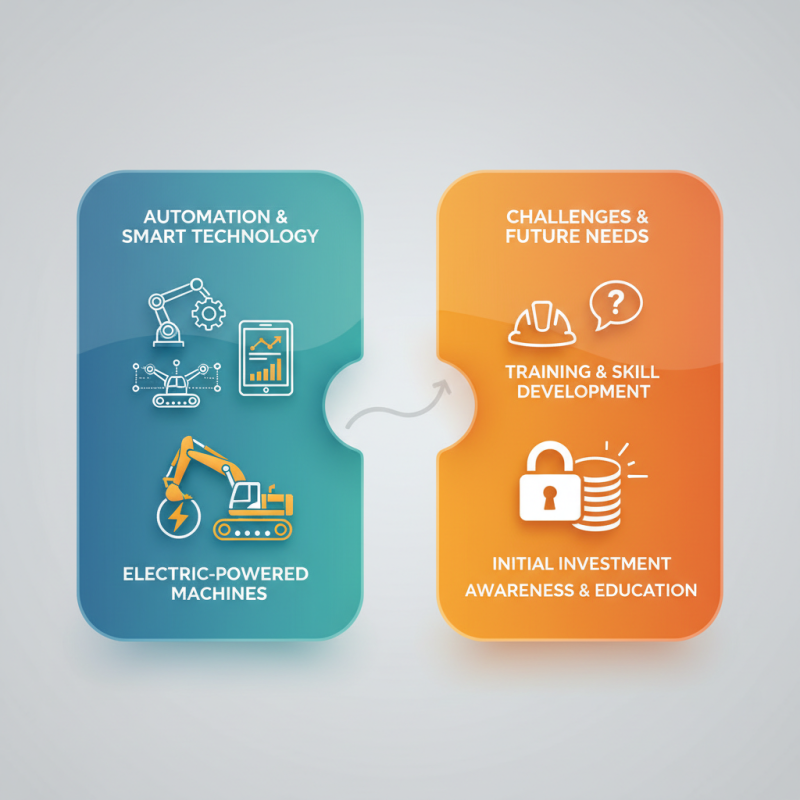
Emerging trends include automation and smart technology. Equipment now often comes equipped with sensors and AI systems. These advancements help in monitoring performance and reducing downtime. In addition, electric-powered machines are gaining traction. They offer reduced emissions and lower operating costs.
However, with all these advancements, challenges remain. Not all construction professionals are ready to adapt. There is a need for training and skill development. Additionally, the initial investment can be daunting. Awareness and education about these trends are crucial for the industry's growth. Exploring these trends will help companies navigate the future of construction equipment effectively.
Emerging Technologies in Construction Equipment for 2026
As the construction industry evolves, emerging technologies are reshaping how we use equipment.
Smart machinery equipped with AI is on the rise.
These machines can analyze data, enhancing efficiency on job sites.
Drones are also gaining popularity. They provide aerial views, helping in site surveys and monitoring.
Virtual reality is another key player.
It allows teams to visualize projects before breaking ground. This helps in planning and reduces costly mistakes.
However, integrating these technologies can be a challenge.
Not every workforce is ready for such changes.
Training is crucial but often overlooked.
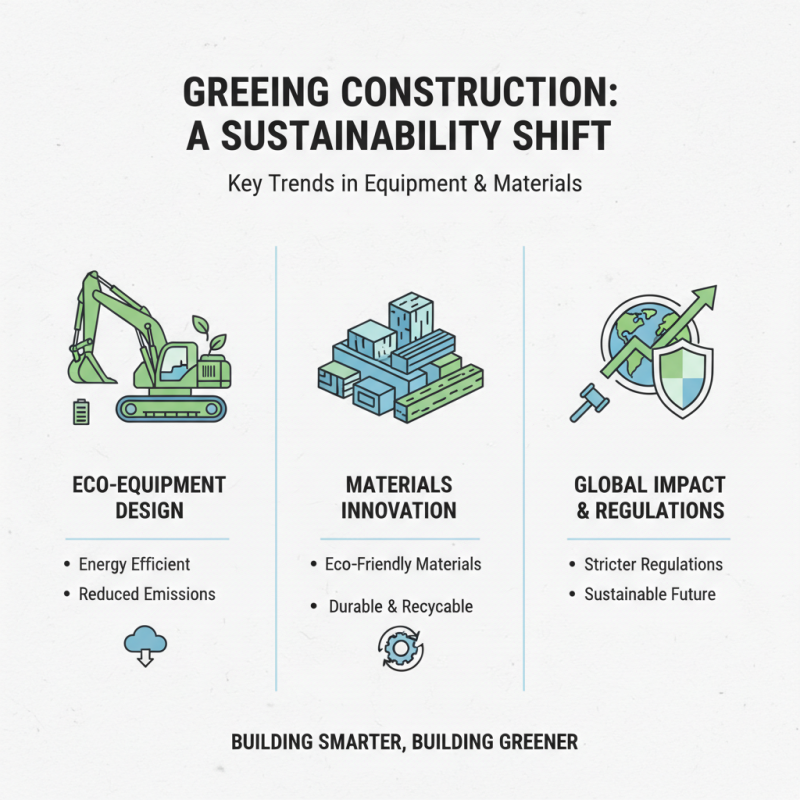
Sustainability remains a focal point. Electric and hybrid machines are becoming more common to reduce emissions.
However, the transition is slow. Many contractors still hesitate to invest.
The upfront costs can be daunting. Overall, the push for innovation in construction equipment is evident, though the path forward must address these challenges.
The Rise of Automation and Robotics in Construction Machinery
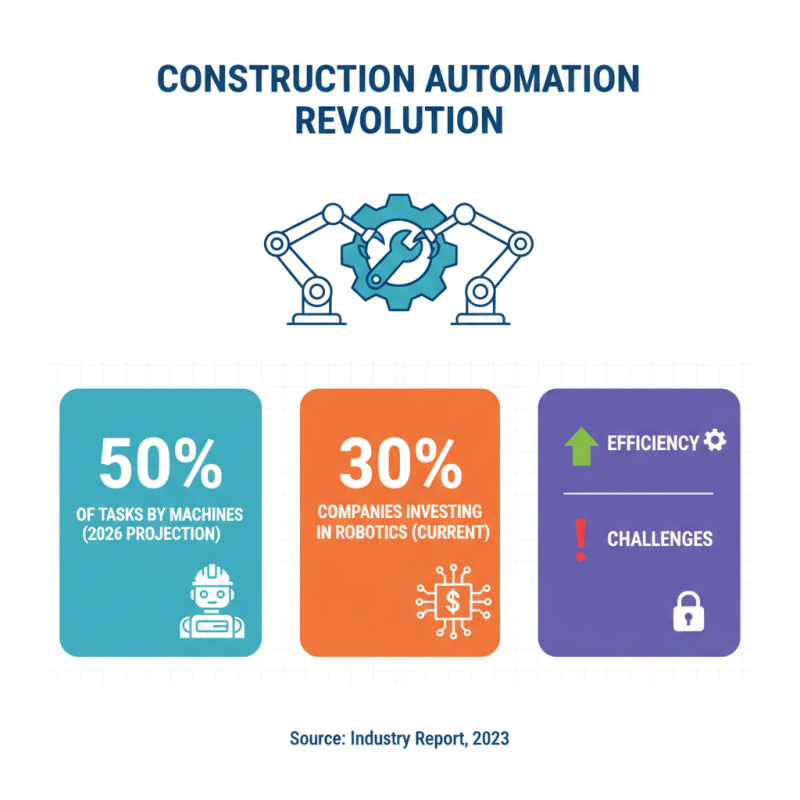
The construction industry is embracing automation and robotics at an unprecedented rate. By 2026, it is projected that over 50% of construction tasks might be performed by machines. Currently, 30% of construction companies are investing in robotic solutions. These technologies enhance efficiency, yet they also raise challenges.
Robotic equipment can complete repetitive tasks with precision. For instance, autonomous drones survey job sites faster than human crews. They can reduce project completion times by up to 20%. However, relying heavily on automation may create skills gaps within the workforce. Many workers may find their jobs threatened or rendered obsolete.
Moreover, the initial costs for automation are substantial. Companies must weigh the investment against potential long-term savings. Reports show that while automation can increase productivity by 25%, the upfront expenses can deter smaller firms from adoption. The ethical implications of automation also need consideration. Balancing technology and human work remains a crucial conversation in our industry.
Key Market Drivers Shaping the Future of Construction Equipment
The construction equipment market is undergoing significant changes, influenced by various key drivers. A report by Fortune Business Insights indicates that the global construction equipment market is expected to reach approximately $250 billion by 2026. This growth is largely driven by urbanization and infrastructure development. Countries are investing heavily in roads, bridges, and buildings. However, the pandemic has disrupted supply chains and raised equipment costs.
Sustainability is another pressing factor. In 2022, about 80% of construction companies identified sustainability practices as essential for future success. Innovations in electric and hybrid machinery are becoming important. Yet, the challenge lies in balancing performance with environmental impact. Not all companies are equipped to navigate this transition.
Additionally, technological advancements are shaping equipment designs. Integrating IoT and AI can enhance efficiency. According to a recent McKinsey report, companies that adopt these technologies can improve productivity by 15-20%. Still, there is a gap in readiness among smaller firms. They often struggle to keep up with these rapid changes. The road ahead presents both opportunities and challenges for the construction equipment industry.
Safety Innovations in the Construction Equipment Industry for 2026
The construction equipment industry is rapidly evolving, especially regarding safety innovations. In 2026, companies are expected to prioritize technologies that enhance worker safety. According to a recent report, nearly 70% of construction accidents can be prevented through better safety measures. This statistic underscores the critical need for improved designs and technology integration.
Wearable technology is set to play a significant role. Smart helmets equipped with sensors can detect potential hazards in real-time. These devices alert workers to unsafe conditions, significantly reducing the risk of accidents. In fact, studies indicate that using such technology can decrease injury rates by 30%. However, there are challenges. Not all workers are tech-savvy. This creates a barrier in fully implementing these innovations on-site.
Furthermore, autonomous equipment is becoming more prevalent. Self-operating machines can minimize human involvement, thereby reducing risks. Some reports suggest that these machines are responsible for a 25% decline in on-site injuries. Still, concerns remain. The reliability of technology in unpredictable environments is a topic for discussion. Addressing these limitations will be crucial for the future of construction safety.
2026 Top Construction Equipment Trends